Our services
Probate Attorney in Tennessee
When someone dies, a family member often has to take charge of paperwork, bills and property while grieving. Betz & Baril explains how Tennessee probate generally works and helps executors and administrators take it one step at a time.
What Is Probate?
Probate is the court-supervised process of settling a person’s estate after death. In general, it confirms who has legal authority to act for the estate, identifies and values assets, pays valid debts and expenses, and distributes what remains to the people entitled to receive it.
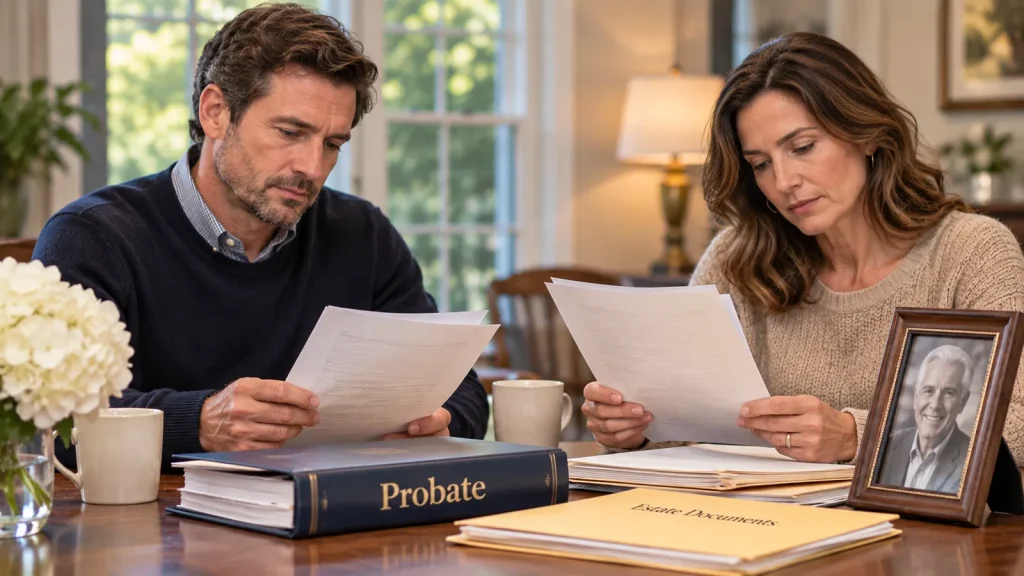
If you are helping settle an estate, gather any will you can locate, a basic list of known assets and debts, and any court paperwork already received. Use the consultation to ask what the firm can assist with and what information is needed next. Request a consultation or explore related information.
If there is a will, the court recognizes the will and the person it names as executor. If there is no will, the court appoints an administrator, and state law decides who inherits.
When May Probate Be Necessary?
Probate may be necessary when a person dies owning property in their own name, with no co-owner or beneficiary who takes it automatically. Examples include a house titled only in the deceased person’s name or a bank account with no named beneficiary.
Some property passes outside probate, such as accounts with a named beneficiary and property held in a trust. Whether an estate needs probate depends on how each asset is titled, so an attorney usually has to review the details. Our estate planning page explains how beneficiary designations and trusts fit together.
Understanding the Tennessee Probate Process
A will is generally proved in the county where the person usually lived at death. If the person had more than one fixed residence, any of those counties may be available.
Which court handles probate depends on the county. In many counties it is the chancery court, but local or private acts can place probate in a different court, for example a probate court.
The general sequence is that someone files to open the estate, the court recognizes the will or appoints an administrator, the estate representative gathers and manages assets, debts are addressed, and assets are distributed. The specific forms, notices and deadlines depend on the circumstances and on current Tennessee law, and we confirm them for each estate.
Probate With a Will
If the person left a will, the executor named in it generally asks the court to admit it. A self-proving affidavit, sometimes attached to a will, is signed by the witnesses before an officer authorized to administer oaths. It is optional, and it lets an uncontested will be admitted without live witness testimony. A notary is not one of the two witnesses, and notarizing a will is not what makes it valid.
A will must also have been properly signed. Courts treat the signatures of the testator and the witnesses as mandatory, and a separate affidavit does not cure missing attestation.
If someone objects to the will, the dispute becomes a will contest. Such contests may be tried in a court of record with probate jurisdiction concurrently with circuit court. Our wills page explains how wills are made, and understanding probate in Tennessee gives a short overview.
Probate Without a Will
When someone dies without a valid will, Tennessee’s intestacy rules decide who inherits. With a surviving spouse and children, the spouse and children share, and the spouse’s share is not less than one-third. A surviving spouse with no children takes the entire intestate estate.
Rules for more distant relatives and for protections such as a year’s support or homestead are more detailed and depend on current law. Read more in what happens without a will in Tennessee.
Responsibilities of Executors and Administrators
An executor is named in a will. An administrator is appointed by the court when there is no will, or when the named executor cannot serve. Both act as fiduciaries, which means they must act for the benefit of the estate and the people entitled to it rather than for themselves.
In general, the role involves:
- Identifying, securing and keeping records of estate assets
- Giving required notices to creditors and others
- Paying valid debts, expenses and taxes from estate funds
- Keeping the beneficiaries reasonably informed
- Distributing the remaining property as the will or the law directs
Specific duties and time limits for delivering or filing a will, bond, inventories and fees are set by Tennessee law and vary with the facts, so confirm them before acting.
Estate Assets and Debts
The estate generally includes property the person owned in their own name. Examples are bank and investment accounts, real estate, vehicles and personal belongings.
Debts are part of the picture. Funeral costs, taxes, administration expenses and valid creditor claims are generally paid from the estate before beneficiaries receive property.
Creditor Claims and Estate Obligations
Creditors have a limited time to present claims against an estate. In general, the deadline is the earlier of two dates. One is four months from the first publication or posting of the notice, if the creditor received an actual copy at least 60 days before that date, or 60 days from receipt of an actual copy if received later. The other is twelve months after death. A creditor who was given no actual notice generally has until twelve months after death. Notices and deadlines depend on circumstances and on current law, so never assume a date without checking.
Some estates are small enough for a simpler procedure. Tennessee has a Limited Letter of Authority process for estates of $50,000 or less in personal property, and real property is outside it. The law governing it was renamed the Small Estate Affidavit Limited Letter of Authority Act in 2021. Sources disagree about eligibility and about whether an attorney is required, so we cannot tell you here whether a particular estate qualifies.
Distribution of Estate Assets
Distribution happens after the estate representative has gathered the assets and addressed debts, expenses and taxes. If there is a will, assets go to the beneficiaries it names. If not, they pass under intestacy rules.
Representatives should keep clear records of what was received and paid. Timing depends on the estate, including how quickly assets are located, whether creditors respond and whether anyone disputes the will.
Common Probate Challenges
- A will that cannot be found, or that was not signed correctly
- A family disagreement about the will, the executor or who should inherit
- Assets that are hard to locate or value
- Debts or creditor claims that are larger than expected
Early advice makes many of these easier to handle.
Estate Administration
Estate administration is the day-to-day work after the court recognizes the executor or administrator: paperwork, record keeping, communication with creditors and beneficiaries, and a final accounting.
A trust has its own administration, which is separate from probate. A trustee follows the terms of the trust document, and a trustee generally must keep current distributees reasonably informed and respond to qualified beneficiary requests, to the extent the statute and the trust allow. See our trusts page for more about trust administration.
How an Attorney Can Help
An attorney can explain which court and forms apply, prepare filings, identify deadlines, answer questions from creditors and beneficiaries, and help you avoid mistakes that could create personal responsibility. We do not guarantee any result or timeline. If you are unsure whether an estate needs probate, a short conversation is a good place to start. You can reach us through our contact page.
Frequently asked questions
Does every estate have to go through probate?
No. Property that passes by beneficiary designation or through a trust may not need probate. Whether an estate does depends on how assets are titled.
In which county is a will probated?
Generally the county where the person usually lived at death. Which court hears it depends on the county.
What if there is no will?
Tennessee intestacy rules decide who inherits. A surviving spouse with no children takes the entire intestate estate, and with children the spouse’s share is not less than one-third.
What does an executor do?
An executor gathers the assets, gives required notices, pays valid debts and expenses and distributes what remains. Specific duties and timing depend on current law.
How long do creditors have to make claims?
There are statutory limits that depend on the notice given and on the date of death. Deadlines depend on circumstances and current law, so ask before relying on a date.
Is there a simpler process for small estates?
Tennessee has a small estate process, but sources conflict about eligibility and whether an attorney is required, so we review each case.
Does probate cost a lot or take a long time?
It depends on the size and complexity of the estate and on whether anyone disputes it. We do not quote fees or timelines here.
Do I need an attorney for probate?
An attorney can explain the forms, notices and deadlines that apply to your estate. Contact us to discuss it.
Questions about a Tennessee estate?
Speak with Betz & Baril about opening an estate, serving as executor or understanding where to begin.
This website provides general information about estate planning in Tennessee. It is not legal advice, and reading it or contacting the firm does not create an attorney-client relationship. Do not send confidential information through this site until an engagement has been confirmed in writing. Past results do not guarantee a similar outcome. Attorney disclaimer