Our Estate Planning Process
Estate planning is easier when you know what comes next. This page walks through our four steps, what to bring to your first meeting, and the questions people most often ask before they begin.
A Clear and Thoughtful Approach to Estate Planning
Many people put off estate planning because they are unsure what the first meeting involves. They worry they need to arrive with every answer, or that the process will be long and confusing. It does not have to be either.
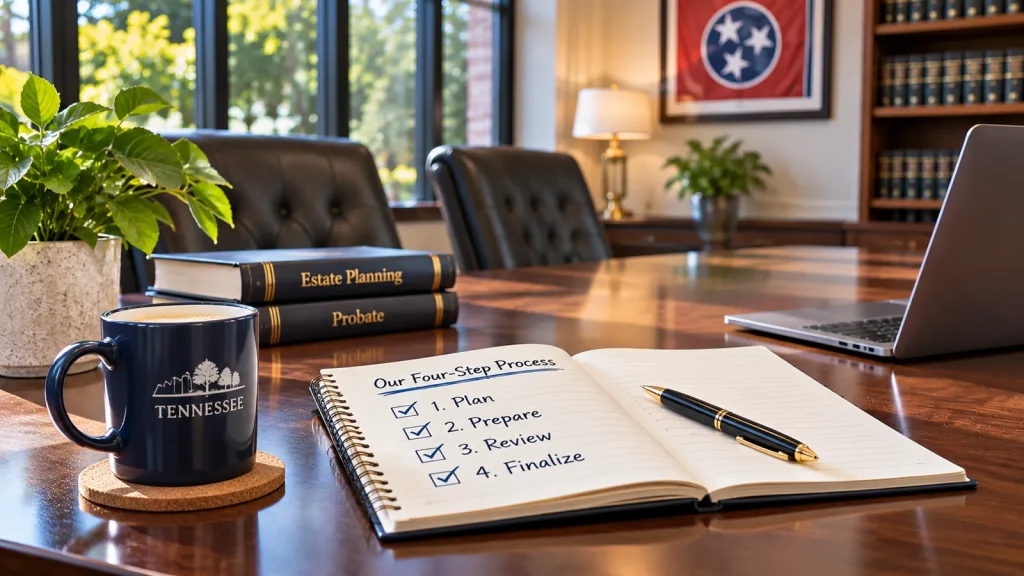
At Betz & Baril, we organize the work into four steps. We begin by listening, then we explain your options, and only after that do we prepare documents. You make each decision, and we explain what each choice means so you understand it before you commit.
You do not need to know the legal terms in advance. If you can tell us who matters to you and what you want to protect, we can handle the rest together. The steps below describe our intended workflow, and details may vary with the type of plan you need.
The Four-Step Process
Step 1: Schedule a Consultation
The first step is a simple request. You can use the form on our contact page or call (865) 888-8888 to ask for an appointment. Tell us which service interests you, such as a will, a trust, general estate planning or probate, and how you would prefer to be contacted.
Our team will review your request and reach out to arrange a time. If you already have documents, let us know so we can ask you to bring them. Please do not include account numbers, passwords or detailed private information in your first message. We will explain what the consultation involves, including .
Step 2: Discuss Your Goals
During the consultation, we ask about your family, your property and your wishes. We want to know who you would like to provide for, who you trust to make decisions, and what worries you most. There are no wrong answers, and you are welcome to say you are not sure.
We also talk about the practical side. Who would manage your finances if you were unable to? Who should speak for you on medical decisions? Is anyone in your family likely to need extra support? This conversation gives us the information we need to recommend a plan that fits your circumstances.
Step 3: Review Your Legal Options
Once we understand your goals, we explain the tools that may fit. Depending on your situation, these can include a will, a trust, a power of attorney for financial matters, and a healthcare directive. We cover how each works, what it asks of the people you name, and what it cannot do.
Some people choose one document, and others choose several that work together. We describe the reasons for and against each option so you can decide with full information. We do not guarantee outcomes, and we will tell you plainly where a tool has limits. You can read more about these documents on our estate planning page.
Step 4: Prepare and Finalize Your Plan
After you choose a direction, we prepare your documents and review them with you. This is your chance to ask questions, correct names or details, and make changes before anything is signed. We want every document to say what you mean.
Then we arrange the signing. Tennessee has specific requirements for how legal documents are signed, and different documents can have different rules, so we guide you through the right formalities for each one. After signing, we follow up to confirm you have what you need, and we talk about when to review your plan in the future.
What to Bring to Your Consultation
You do not need a complete file. A few items help us make the most of your time:
- Existing documents: any will, trust, power of attorney or healthcare directive you already have, even if it is old.
- Basic asset information: a general list of what you own, such as a home, bank and retirement accounts, life insurance and vehicles. Please leave out account numbers and passwords.
- Questions about beneficiaries: who you want to receive property, and any questions about people you have named on accounts or policies.
- Possible decision-makers: the names of people you are considering as executor, trustee, agent or guardian, and any backups.
- Personal concerns: family circumstances, health matters or worries you want us to understand, such as a blended family or a relative with special needs.
If you do not have something on this list, come anyway. We can often help you figure out what is missing.
How Long Does It Take?
We do not promise a set timeline, because the length of the process depends on the plan. A simple will usually involves fewer decisions than a plan that includes trusts and several supporting documents.
Several factors affect timing. These include how many documents you need, how complex your family and property are, how quickly you can gather information and make decisions, and how our schedule and yours line up for review and signing. If a trust is part of your plan, moving assets into it can add steps. We will give you a realistic picture of what to expect once we know what your plan involves.
Frequently asked questions
Do I need to prepare anything before my first meeting?
You do not need to prepare a formal file, but a few things help. Bring any existing estate planning documents, a general list of your assets without account numbers, and the names of people you are considering for important roles. Writing down your questions beforehand is also useful. If you are unsure where to start, our checklist above covers the main items.
Do I have to decide everything at the first meeting?
No. The first meeting is for sharing your goals and learning your options. Many people take time to think before choosing a plan. We would rather you understand your decisions than rush through them, and you can ask follow-up questions after the consultation.
Should I bring my family members?
You are welcome to discuss the meeting with family beforehand, but please talk with us about who should attend. Because the conversation covers private matters, it is often best to meet individually or as a couple first. We can talk through any questions about including others when you schedule.
What if I already have a will or trust?
Bring it. Reviewing an existing document is a common reason for a consultation. Life changes, such as marriage, divorce, a new child or a move, can affect whether a plan still works. We can read your documents with you and explain whether updates may be worth considering. See our FAQ page for more on updating documents.
Is the consultation confidential?
We treat what you tell us as confidential. Until the firm confirms that it will represent you, though, contacting us through the website does not create an attorney-client relationship, and you should avoid sending highly sensitive information through the form. We will explain how the relationship begins when we speak.
What happens after I sign my documents?
After signing, we follow up to confirm you have what you need and answer any remaining questions. We also discuss practical steps, such as who should know where your documents are kept and when to review your plan again. Some plans, such as those with trusts, may need additional steps to put assets in the right place.
Schedule Your Consultation
Take the first step toward a plan that reflects your wishes. Contact Betz & Baril to request an appointment.
This website provides general information about estate planning in Tennessee. It is not legal advice, and reading it or contacting the firm does not create an attorney-client relationship. Do not send confidential information through this site until an engagement has been confirmed in writing. Past results do not guarantee a similar outcome. Attorney disclaimer